

New 'track and trace' program will use AI, robotics to map BC's deadly toxic drug supply
Nothing in Nina Krieger's resumé suggested an interest in crime-fighting, but BC's minister of public safety is using innovative partnerships to put more heat on organized crime

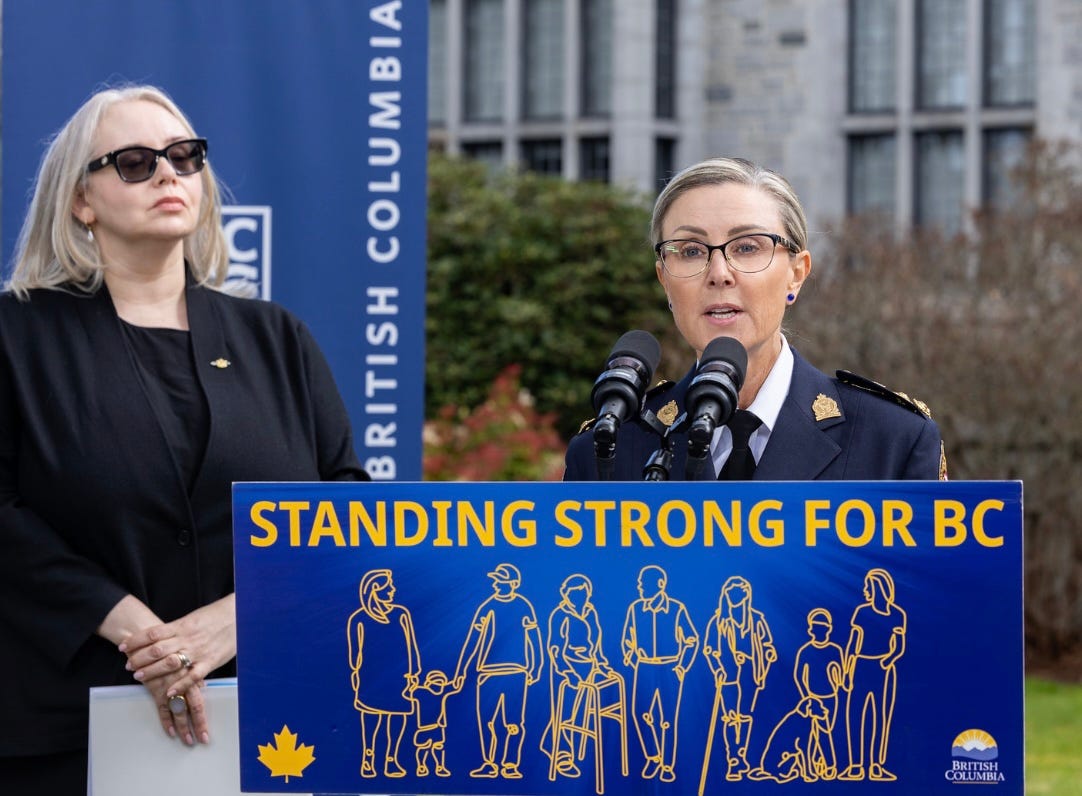
As BC’s deadly illicit drug emergency enters its eleventh year, Public Safety Minister and Solicitor General Nina Krieger is leading a quiet revolution in the province’s response to organized crime, finally linking police enforcement with public health to disrupt the toxic drug supply chain.
Krieger stood with Health Minister Josie Osborn and BC police leaders April 17 to announce a pilot project using new digital technology and lab robotics to track and trace the flow of toxic drugs. Police and public health leaders expect the new data will assist police intelligence and create earlier warning of increased danger from illicit drugs.
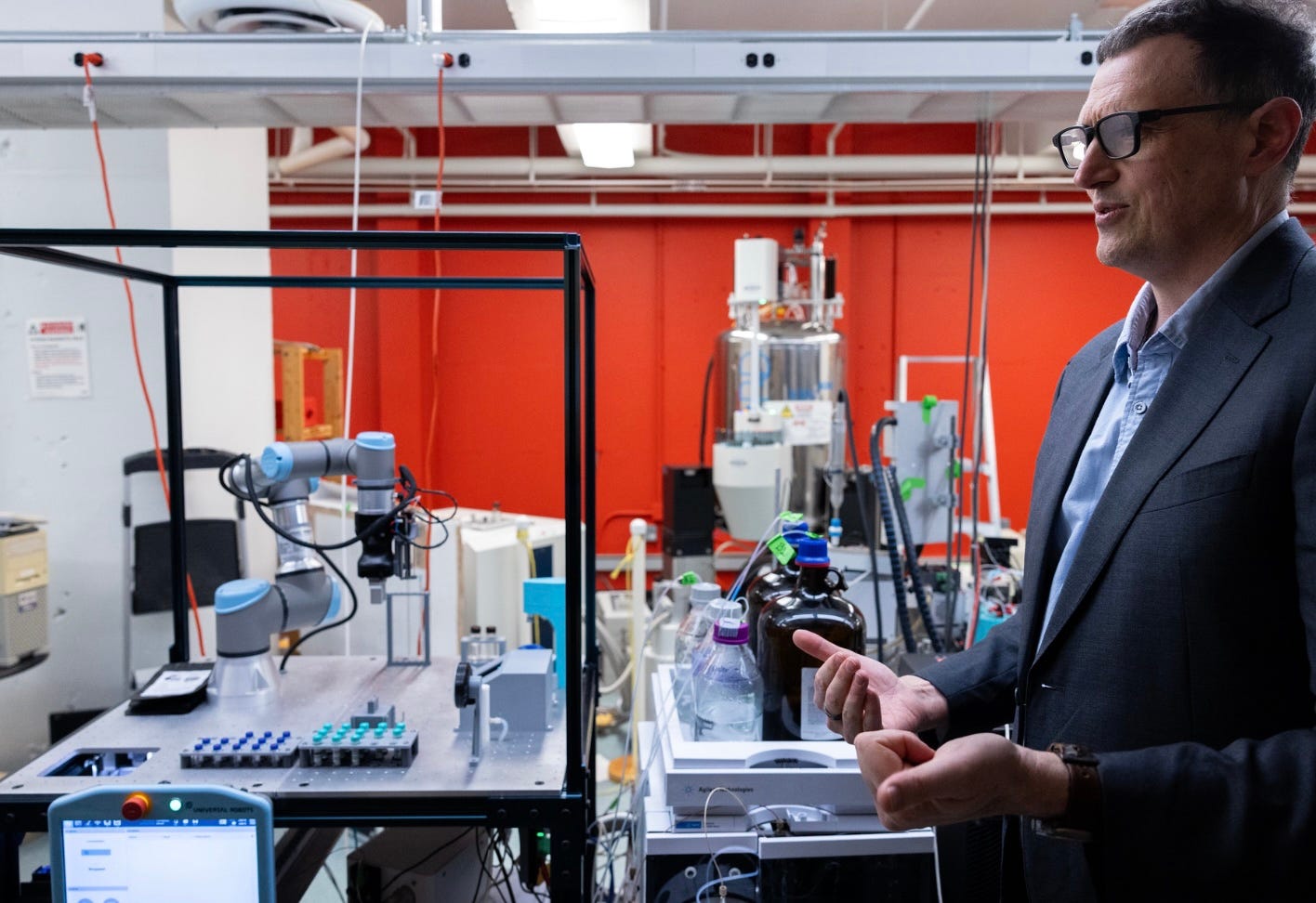
“The illicit drug supply is changing faster than our warning systems,” Krieger said. New “track and trace” technology developed by Aidos Innovations at UBC will use robotics and an AI-assisted dashboard to help law enforcement map and forecast drug distribution routes by quick analysis at the molecular level. Every police agency in the province has signed on.
“To defeat fentanyl, we need to understand where it is produced, how it is trafficked and where it ultimately ends up,” said Kevin Brosseau, Canada’s so-called “fentanyl czar” charged with leading the nation’s fentanyl response. “This will enable law enforcement to understand the criminal networks behind the fentanyl trade and dismantle them.”
Since the declaration of the overdose emergency in 2016, BC’s response has been overwhelmingly focused on harm reduction. Collaboration between law enforcement and public health was minimal, except in the early days of the decriminalization pilot.
Monthly fatal overdoses were tallied by the BC Coroners Service, but police had no consistent system to track the targeted killings in the drug trade that made up to forty per cent of the murder rate. Police and public health officials were fighting the same enemy but seldom, if ever, talked.
Victoria Chief Constable Fiona Wilson, one of the police leaders involved in Track and Trace, described it as “the single most important advancement” she had seen in her 25 years in law enforcement. “We’ll be able to make decisions in real time to target criminal networks as never before.”
The toxic drug crisis knows no boundaries, Krieger says, and everyone involved in the fight against the toxic drug supply was keen to collaborate. “Track and trace is a small but practical step.”
Krieger has made partnerships the hallmark of her leadership at PSSG and it’s showing results.
The provincial government has been critical of police strategies to reduce organized crime since at least 2022, when Krieger’s ministry commissioned a deep review of the RCMP’s disorganized response to gang violence. A scathing report followed, and former Solicitor General Mike Farnworth began an overhaul with the creation of an Integrated Gang Homicide Team. Job One: whittle down BC’s backlog of 356 unsolved gang killings.
But the big changes came on Krieger’s watch in September 2025, when community outrage at unchecked extortion shootings, then running at more than one a day, created a political crisis. Krieger stood up the BC Extortion Task Force pulling together every major enforcement agency to launch a co-ordinated counter-attack that was the most comprehensive in the province’s history.
It seems to be paying off, with other jurisdictions across Canada adopting similar approaches.
Surrey Police Services Chief Norm Lipinski reported April 11 that the number of extortion threats in that city dropped to fourteen in March from forty-four in January. The impact of co-ordinated enforcement has been evident nation-wide, with Edmonton police arresting one man who was linked to crimes in Alberta, the Lower Mainland and Saskatchewan. (Ardeep Singh, who was in Canada on a student work permit, was deported.)
The connection to Canadian Border Services Agency, formalized by the BC Task Force, has been critical. The CBSA reported in March that it had investigated 372 suspected extortion cases, resulting in 70 removal orders and 35 deportations.
Kriger acknowledges that extortion threats and violence are down, adding “I think that enforcement work and more visible removal [of suspects] have played a role,” but cautions “there was another shooting last week and no one has taken their foot off the gas.”
Krieger didn’t stop with the task force. In February, she pushed the federal government to pass Bill C-12 to close immigration loopholes used by organized gangs to further extortion. The bill became law March 26.
Five days later, Krieger announced an expansion to the province’s Civil Forfeiture Office, which is financed through seizures of the proceeds of crime, to increase its ability to identify, freeze and secure major assets held by organized crime. (This legislation was used to seize three Hells Angels club houses. Now the CFO wants three more.)
The CFO will nearly double in size during the next three years, with new specialized investigation and litigation teams to tackle financial crime and distribute more crime prevention funds to communities. While the CFO process doesn’t send anyone to jail, it does reduce the profits of crime and can undercut criminal enterprises. Criminals hate it.
There was nothing in Krieger’s resumé that marked her as a potential crime fighter. Before entering politics, she was director of the Vancouver Holocaust Education Centre and active in arts organizations. First elected as MLA for Victoria Swan Lake in 2024, Krieger was appointed a lowly Parliamentary Secretary for Arts and Film, before landing Public Safety and Solicitor General in a minor cabinet shuffle the following summer.
“When you step into the political arena, you’re in terrain where anything can happen,” Krieger said in an interview. “This ministry is hugely consequential, a chance to do something through partnerships among organizations that are involved to do good. Until now, all had been on their own.”
Despite its modest size – only $300,000 a year for two years – the Track and Trace pilot program marks a dramatic departure from conventional thinking. As new contaminants enter the drug supply, overdose death rates are declining but overdoses are not.
The program will assist police and public health understand and perhaps track down the men who are twisting the dial on the toxic drug supply. That supply is bigger and dirtier than ever, despite recent police successes.
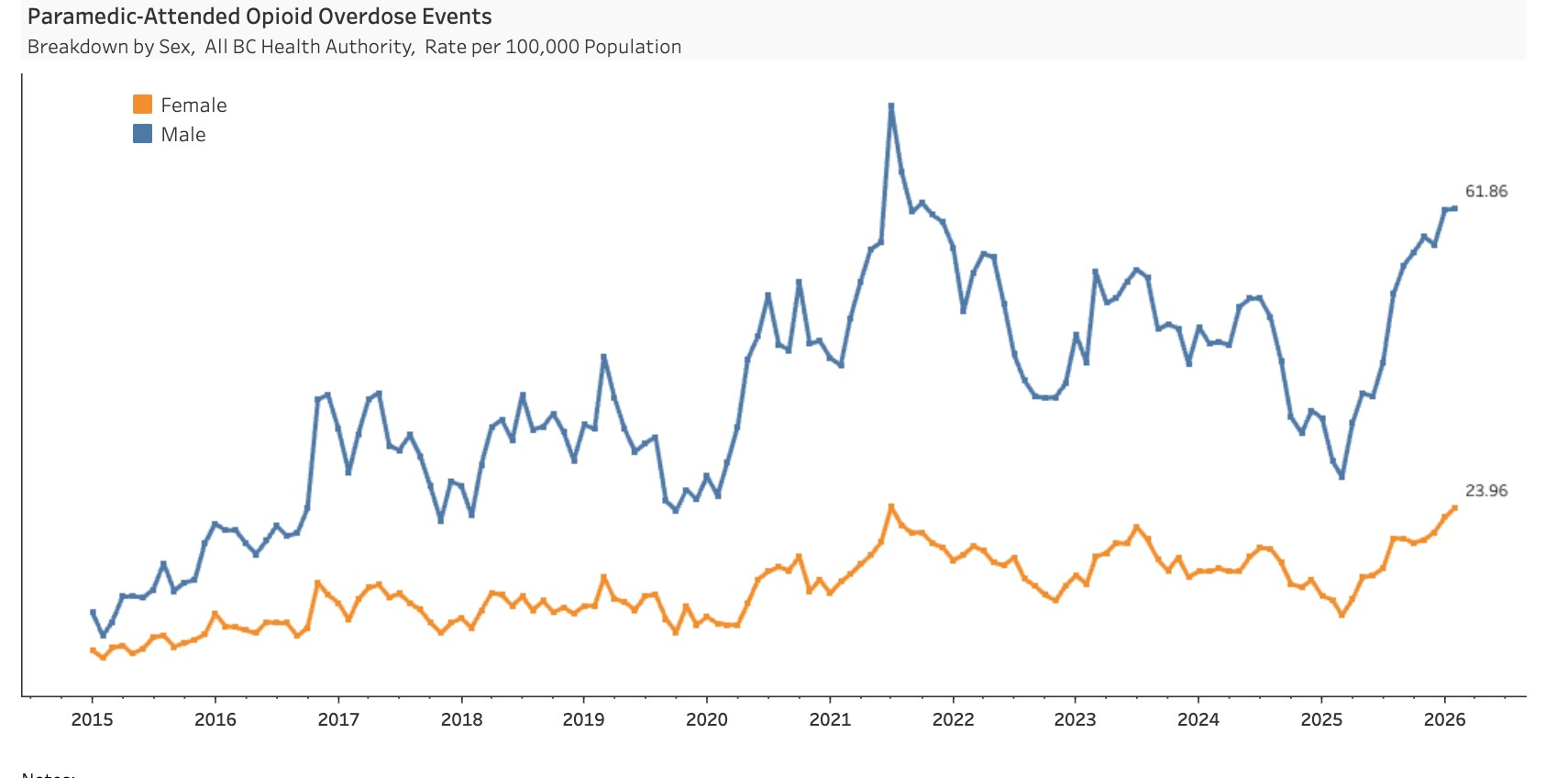
In the wake of a significant decline in overdose deaths last year, the BC Coroners Service reported 115 deaths in February, down from 150 the month before. Any decline is welcome, but the BC Emergency Health Service reports paramedic-attended overdose calls near an all-time high, driven by new contaminants like medetomidine. The illicit drug supply still claims about four lives a day.
It’s difficult to visualize the enormous scope of the illicit drug trade in this province, which markets to more than 225,000 users, about half of whom have diagnosed substance use disorders.
The Vancouver Sun’s Joseph Ruttle reported April 15 that police have finally processed the 40 kilograms of fentanyl they seized in Chilliwack last October, one of the biggest superlab busts in provincial history.
The huge supply of drugs seized in that operation alone included methamphetamine, MDMA and a staggering five metric tonnes of chemicals and precursors, along with reactor vessels, holding tanks, mixers and a pill press. Two were arrested.
Police seized another 50.7 kilograms of fentanyl in November, equivalent to 504,700 doses. Ruttle reported that since the bust of the Falkland superlab in late 2024, the largest in Canadian history, police have raided at least 14 more labs across the province. Yet the street supply seems unaffected.
Just two weeks before Krieger’s Track and Trace announcement, officers of CFSEU’s Uniform Gang Enforcement Team conducted a traffic stop in Surrey that netted 3.5 kilograms of fentanyl packaged in bulk, vacuum-sealed bags. Also in the car: more than a kilogram of cocaine and 1.2 kilograms of methamphetamine. Evidently, even retail-level dealers measure inventory in thousands of doses.
The end of the decriminalization pilot program signalled the high water mark of harm reduction as a primary response to the toxic drug crisis. The Track and Trace program, small as it is, may mark the beginning of a new strategy that integrates, at last, both enforcement and public health.
If the government adds in broader treatment options and more addiction prevention, it will have a winning combination.
Lies! From this article:
"Since the declaration of the overdose emergency in 2016, BC’s response has been overwhelmingly focused on harm reduction."
By far the majority of funds BC has spent on this public health emergency has gone to enforcement.
From TEN & COUNTING (BC Coalition of Organizations By/For PWUD):
"8 is the percent of funds from the Canadian Drugs and Substances Strategy that went to harm reduction ...
58 is the percent of funds from the Canadian Drugs and Substances Strategy that went to enforcement"
If this is the best they've been able to come up with in 25 years...!
" ... the big changes came on Krieger’s watch in September 2025, when community outrage at unchecked extortion shootings, then running at more than one a day, created a political crisis. Krieger stood up the BC Extortion Task Force pulling together every major enforcement agency to launch a co-ordinated counter-attack that was the most comprehensive in the province’s history."
In Kingston, it is wearisome and enraging to have almost no coverage about how law enforcement is addressing the sources of our killer drugs. Go Krieger, go!