


The survivors of BC’s toxic drug crisis are invisible but all around us.
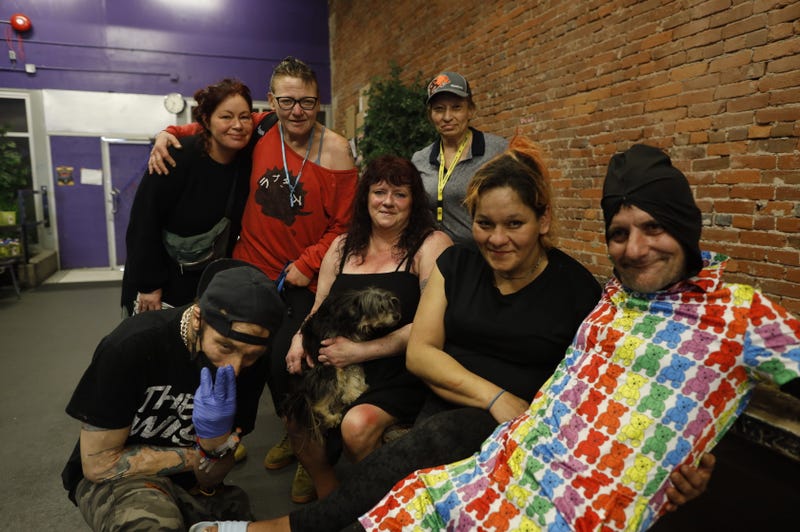
We can’t see them, but they’re there, at least one for every one of the 17,000 British Columbians lost to the toxic drug supply since 2016, proof that the fight against the overdose crisis has not been in vain, that hope endures and that recovery, no matter how difficult, is possible.
They may have struggled with deadly substance use disorders, perhaps lost their job or their marriage, become homeless, overdosed, been revived, entered treatment, then relapsed but ultimately recovered.
They could be the construction worker carrying rebar across a building site, your letter carrier, your accountant, the mother with her kids at the bus stop, a lawyer on a “medical leave,” a waiter or a college student. Anyone can be at risk, none find it easy to quit.
While debate rages about decriminalization and safer supply, the province’s efforts to improve access to care, detox, housing, treatment and recovery are saving many, many lives. What Judy Darcy, BC’s first mental health and addictions minister, called a “broken system” is now completely transformed.
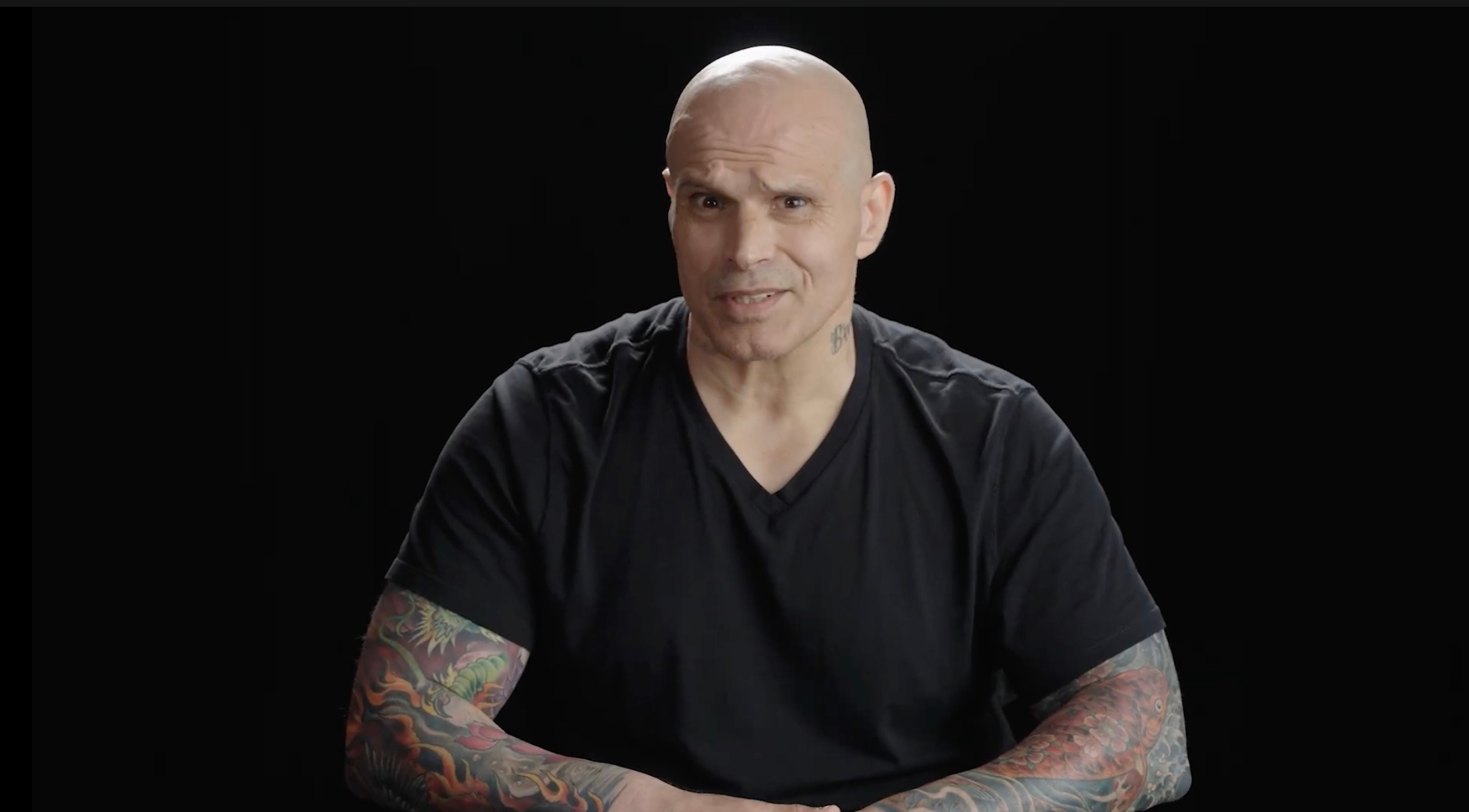
Guy Felicella, a six-time overdose survivor himself, now a peer clinical advisor for the BC Centre for the Study of Substance Use and Vancouver Coastal Health’s regional addiction program, has seen the results at ground level.
“It’s changed dramatically,” he said in a recent interview. “I can remember how people would try to access detox. Treatment services would take weeks, if not months. Now we’ve changed the whole structure of how to access detox. Someone who’s overdosing once or twice a week, we’re getting them into detox now within, you know, 24, 48 hours, which is phenomenal. Others who are not at high risk, it’s usually a few days.
“A doctor can prescribe medications for you to take while you’re waiting, tide you over, to alleviate withdrawal. So that part’s completely changed, that never existed before.”
We met at an Italian café at the corner of Carrall and Cordova, the crossroads of the toxic drug crisis. Just steps away was the location of the city-managed sidewalk street market where Overdose Prevention Site (OPS) founder Sarah Blyth heard repeated cries for help in 2016 as fentanyl began to rip through the Downtown Eastside.
Within a two-block radius is the OPS and Insite, the supervised injection site where thousands of lives have been saved since its opening in 2003. One block north is the Gastown location of Loft 6, the scene of a deadly shootout the same year that ushered in a generation of gang warfare over the profits of the drug trade. One block south is the Pennsylvania Hotel, one of the neighbourhoods’ first supported housing projects, where a constant swirl of dealers and scavengers market their wares.
What Blyth began under a canopy in a nearby alley in 2016 now is a province-wide network with 58 locations, twelve in Vancouver. These sites have registered 5.6 million visits and averted more than 12,400 overdose deaths since 2019.
Safe consumption sites are only part of the provincial response. For people using at home or in some private setting -- about half of the province’s 225,000 users -- there’s the Lifeguard app, which a user starts as he or she takes the drug. If the user doesn’t answer an alarm in a defined time, the app calls an ambulance. In 2025, British Columbians downloaded the app 76,188 times. The Ministry of Health estimates 121 lives were saved.
That’s on top of the 2,400 locations to pick up free naloxone kits (40,000 shipped in 2024) and 125 drug testing locations. (Despite the outcry about prescribed safe supply, only 3,100 clients were on the program in June 2025.)
From minimizing overdose risk to seeking treatment is a giant step for any user. New provincial programs make it as simple as possible. The province has added about 760 publicly funded beds since 2017 for a total of nearly 3,500 beds in all. Getting one is easier than ever.
As someone who was arrested many times for simple possession, Felicella was bitterly disappointed by the cancellation of the decriminalization pilot program, but is a strong supporter of Access Central. The 12-hour a day hotline was launched in 2023 to provide direct access to counselling, detox and treatment.
Although greeted with derision by Claire Ratteé, the Conservative critic for mental health and addiction, Access Central has received more than 34,000 calls since 2023 and done clinical assessments for more than 9,000. (Ratteé claims the service consists of a voicemail box and a promise of a call within 48 hours. When I called, a counsellor answered in 30 seconds.)
Access Central call is the first step for many on what the province calls the Road to Recovery, a comprehensive response to the toxic drug crisis that received $500 million in net new funding in the 2025 budget. Formally launched in 2023, Road to Recovery pulled many existing programs into a co-ordinated response with long-term resources.
For users seeking detox and access to treatment, the province has built Rapid Access Clinics in Vancouver and Surrey, which offer comprehensive support from doctors, nurses, addiction specialists and peer workers. (These pilot facilities, established in late 2024, are now being expanded province-wide.)
The next step after detox, Felicella says, is stabilization. “One huge gap for people is the time required to get into different treatment facilities, because some provide services that don’t always meet the needs of the individuals. To get into treatment services can take anywhere from three to six weeks. depending on which treatment facility that you’re going to.”
At St. Paul’s Hospital, where one Rapid Access Centre is located, clients waiting for treatment can stay in what Felicella calls “a structured environment,” where support is provided but residents can go for walks, work out, or participate in recreation programs.
After stabilization comes treatment, perhaps more than once. Felicella is sceptical of the value of tracking treatment outcomes because relapse is so common.
“Some people will say, oh, 70 per cent success rate at our treatment program or 80 per cent success rate of our treatment facilities,” he says. “I want to throw all that out the window. It’s good that people are completing your treatment program. But what happens after treatment is really a big gap that still exists in our society, and the biggest gap is the access to housing.”
Despite the dramatic changes he has seen in the last few years, Felicella believes this post-treatment phase is where the greatest effort still come.
A post-treatment plan, he says, cannot include living in a shelter or returning to life on the street. “Don’t expect people to go and change their lives if you’re not going to provide something better for them. The plan has to include you going to your own little, you know, studio suite or it’s a house with other people that are in recovery.” An employment opportunity is also critical.
Creating a solid discharge plan from treat or a recovery facility remains one of the greatest challenges for the health care system, Felicella says, particularly for the homeless. It’s one of the largest barriers to entering treatment. In his own case, he had lost the ability to perform the most basic daily tasks and needed the support and advice of his future wife to reconnect with normal life.
“This is not the life that they want,” Felicella says, “but they know exactly what happens after. People that have gone through the treatment industry numerous times ask, ‘Well, Guy, why would I go if they’re going to put me back into the environment that I’m trying to break free from? Or that’s all that’s available, or that’s all I can afford?’ So people don’t even try. People give up. They feel hopeless.
“I think the biggest gap is for us to focus on is what’s going to happen after treatment. We can’t expect that in 90 days or six months somebody will magically be, like, ‘I’m a new person and I’m going to change my life.’ This is a process that’s going to take years.”
Too often, he believes, people in recovery are blamed for the addiction they’re confronting rather than celebrated for what they’ve overcome. A CEO or a construction worker who recovers may get a second chance, but a survivor of street homelessness often does not. “We’re discouraging people, we’re not giving them the opportunity.”
As we drink our coffee, we can watch two men outside a convenience store earnestly sort through old clothes and street debris accumulated in their shopping carts. Another couple in hoodies push their carts past our window, with glass pipes, foil and lighters at the ready.
This is all familiar territory for Felicella, who spent years using, dealing and nearly dying in this neighbourhood until a final brush with death moved him to tell a nurse, “I want to stop, but I don’t know how.”
Why do people stop using drugs?
“What happens to a lot of people that struggle with addiction is that the drugs don’t work anymore,” Felicella says. “They do the drug because it gives them the euphoria to distract them from how they feel about themselves. So that works. The problem is that it only works short term. So, it’s like you’re seeking relief and relief is only temporary. And when you look at healing, that is something that’s more permanent.”
Many people on the street have lost faith, he says, in their own ability to do anything. “There are a lot of assets that people have on the street that are good assets. They’re just used in the wrong way.
“I think you have to encourage people. People need an opportunity. I feel that is one of the worst things that goes on. People aren’t given a fair shot.” Perhaps the shoplifter should be given a job floor walking at London Drugs, he suggests, or a bicycle thief hired to repair bikes, or even cars.
“What I’ve discovered in recovery is a couple things,” he continues. “Number one, you have to have integrity and honesty to do things differently. Right? That means you’re not in the Downtown Eastside selling dope, stealing property. That is often harder for people to do [than quitting] drugs. You’ve got to change the lifestyle.
“The easiest thing that anybody’s going to do is get off the drugs. The hardest everybody’s going to do is changing the life that they led. I think that is almost more addictive. The drugs themselves become an ingrained behaviour.”
The key to success in the Road to Recovery, Felicella says, is the rediscovery of connections for the person confronting addiction. It can begin with a simple conversation, then a call to the Access Centre, to detox, stabilization and into treatment.
“That connection is the biggest reason why people stay sober” Felicella says. “So that’s Road to Recovery. That’s the recovery community centers. That’s the recovery cafes. That’s treatment facilities. And that needs to exist for people to come out into the communities that they’re going to be in.”
Communities across the province, particularly First Nations, are increasingly taking up the challenge of building and maintaining the new connections that support recovery.
Despite the sadness and loss he encounters every day, Felicella clearly loves the ability he and other peer counsellors have to help people make change.
“I can get people into recovery houses within, like, days,” Felicella says. “I’ve just got to get you through detox so you’re not in withdrawal. I’ll get you into a recovery house, which is not heavy, structured treatment, but you can’t use there.
“You have to go to group, you have to do a chore, and you have to go to meetings, and you’re in with a group of people that are trying to do the same thing. Some are working, some are not. You do chores around the house, a great, great little step.
“You can stay there for up to two years. Hey, you can get a job. You can go to work, you can do it your way. You can make your own recovery. You just can’t go get high. You get high, they’ll kick you out.
“And I get people in there, they love it. . . In the end, I didn’t go through another treatment facility. I just went to a recovery house. You know what I needed more than anything? I just needed to be safe from myself. I had to be out of the Downtown Eastside and be around people that weren’t doing dope all day. And that’s how my life changed.”
These days, Felicella sees many more people able to start on the Road to Recovery. Many more could finish the journey, he believes, if government and business collaborated to create jobs and opportunity for those leaving treatment and recovery. “You can’t keep complaining about people going backwards when nobody’s given them an opportunity to move forward.”
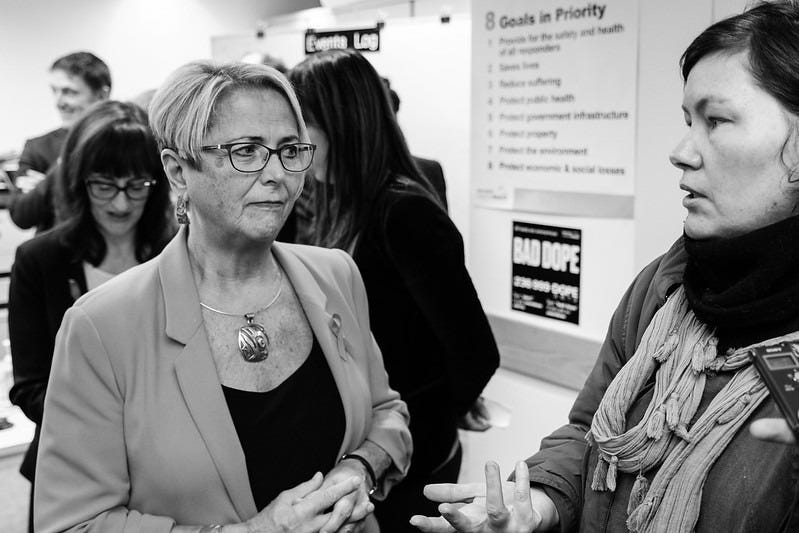
As Judy Darcy writes in Leading from the Heart, her autobiography, “you have to be alive to access treatment and recovery, and treatment must be available when and where people need it.” BC is beginning to get this part right. More people are surviving; more are getting treatment. In that respect, the problems Felicella describes are good ones to have.
Scientists struggle to explain continent-wide decline in overdose deaths. Is China responsible? Not likely in BC
Why have overdose deaths declined simultaneously across North America? A new study in Science suggests that reductions in the supply of Chinese precursors may be the cause, not harm reduction programs, no matter how effective they are.
If true, the findings suggest that enforcement efforts may be a more important part of the crisis response than advocates have acknowledged. The authors of the study, including Jonathan Caulkins, who was retained by Provincial Health Officer Bonnie Henry to analyze BC illicit opioid markets, do not think any one factor has caused the decline.
Canada and the United States have seen similar drops in overdose rates, Caulkins told The Atlantic, despite very different responses to the drug crisis. If he’s forced to choose, he likes the idea that interventions in China have resulted in supply declines in North America.
Although BC overdose deaths are declining, the province still sees about five deaths a day and experts remain uncertain about the causes and implications. The BC Centre for the Study of Substance Use believes harm reduction measures are having an impact, but the number of users at risk may also be declining because of the unremitting death toll.
Not interviewed by any of the researchers, for obvious reasons: the executives of Canadian transnational crime organizations who drive the supply with superlabs that account for a significant share of global illicit opioid production, both for domestic sale and for export.
Excellent coverage of an extremely difficult topic. People use, and stop using, for all sorts of reasons but the key to long term recovery is the opportunity to participate in loving caring relationships. I love the pictures you included of smiling people. Thank you!